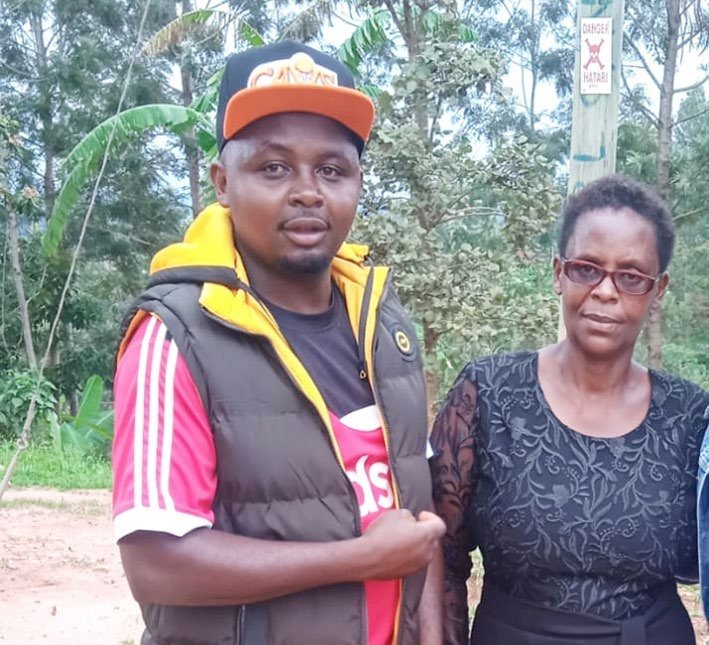


2006 – Kanu enlists in the Republic of Sierra Leone Armed Forces (RSLAF), beginning a 17-year military career. He is deployed to districts including Koinadugu and Kambia, plays for the military football team, and after Sierra Leone's 2018 elections, is selected for the presidential guard and posted to the vice president's security detail near the State House.
Late 2023 – Following a change of government, a former military colleague turned Deputy Minister for Internal Affairs accuses Kanu of political disloyalty and warns him he does not belong in sensitive security posts. Kanu feels threatened. He tries and fails to obtain visas to Europe. Russia, he concludes, is the only option remaining. "I just wanted to leave the country." Through a contact in Guinea, he is introduced to a man he knows only as Mr Harry, who speaks vaguely about "programmes" that can secure a Russian tourist visa. Kanu pays around $7,000 covering the visa, accommodation, and flights, borrowing from siblings based in the UK. He travels from Sierra Leone through Conakry, Côte d'Ivoire, Ghana, and Dubai.
27 November 2023 – He arrives in St Petersburg. No one meets him at the airport. Instead, a text message instructs him to wait in a certain spot for a taxi. By the time the vehicle arrives, it is dark and cold. He must hand over an additional $1,500 to a man he can barely see.
2 December 2023 – Kanu is taken to a hostel-like building and told to stay in his room. After three days, documents written in Russian are placed before him. There is no translator. He signs them anyway, photographs the pages, and sends them to the intermediary. On 7 December, calls begin arriving from an unfamiliar Russian number. He forwards it to Harry. The response is swift: the contract has been accepted. Next will be two weeks of training.
9 December 2023 – He is sent by train to Rostov alongside five Russian-speaking recruits, the only African in the group. On arrival at a military facility, their passports are collected. That’s when he realises this is a military camp. He messages Harry, insisting there’s been a mistake. The reply is brief: he has signed a one-year contract and nothing can be done. When he keeps pressing, his messages stop being delivered. His UK relatives who try to intervene are also cut off. He learns from fellow recruits that the contract promises a sign-on bonus of one million roubles (US$11,834) and a monthly salary of around 200,000 roubles ($2,366). He later finds only around half the bonus – about 500,000 roubles – in his account, but he can’t transfer any of it home.
January 2024 – After two weeks of training alongside Russian nationals he says were recruited from prison, he is deployed to the frontline near Donetsk. His account of combat is detailed: drones overhead, suppressing fire, orders to advance across open ground. At one point he is ordered forward with only two others towards positions defended by tanks. "They wanted us to take a position with the tanks," he says. "I told them, this is not possible." He fears the consequences of outright refusal – "If I don't, maybe they will shoot me from behind," he thinks, so he advances.
9 February 2024 – Less than three months after arriving in Russia and around two weeks into frontline deployment, he is injured in a blast during a retreat under drone fire. Unable to run, he moves alone through damaged buildings, reciting Psalm 23 from a pocket Bible. The following morning, Ukrainian soldiers find him. His first question is whether they intend to kill him… They do not.
2024–2025 – More than 15 months on, Kanu remains a prisoner of war in Ukraine, transferred between facilities and held for periods underground. There is no clear path out – prisoner exchanges have so far primarily involved Russians, not foreign nationals. He fears that if returned to Russia, his contract could be automatically renewed under wartime rules.
His tone across three interviews shifts between pragmatism and frustration – at Russia, at the recruiter, at the contract he could not read. His case sits in a grey zone: unlike those who say they were deceived with no prior military experience, Kanu is a trained soldier who recognised a military camp when he saw one. Yet he insists that what drove him to Russia was escape, not combat.
“I don't want money anymore; I don't want contracts. I don't want war… Just tell my people that I am still alive."
Richard Kanu, Sierra Leone